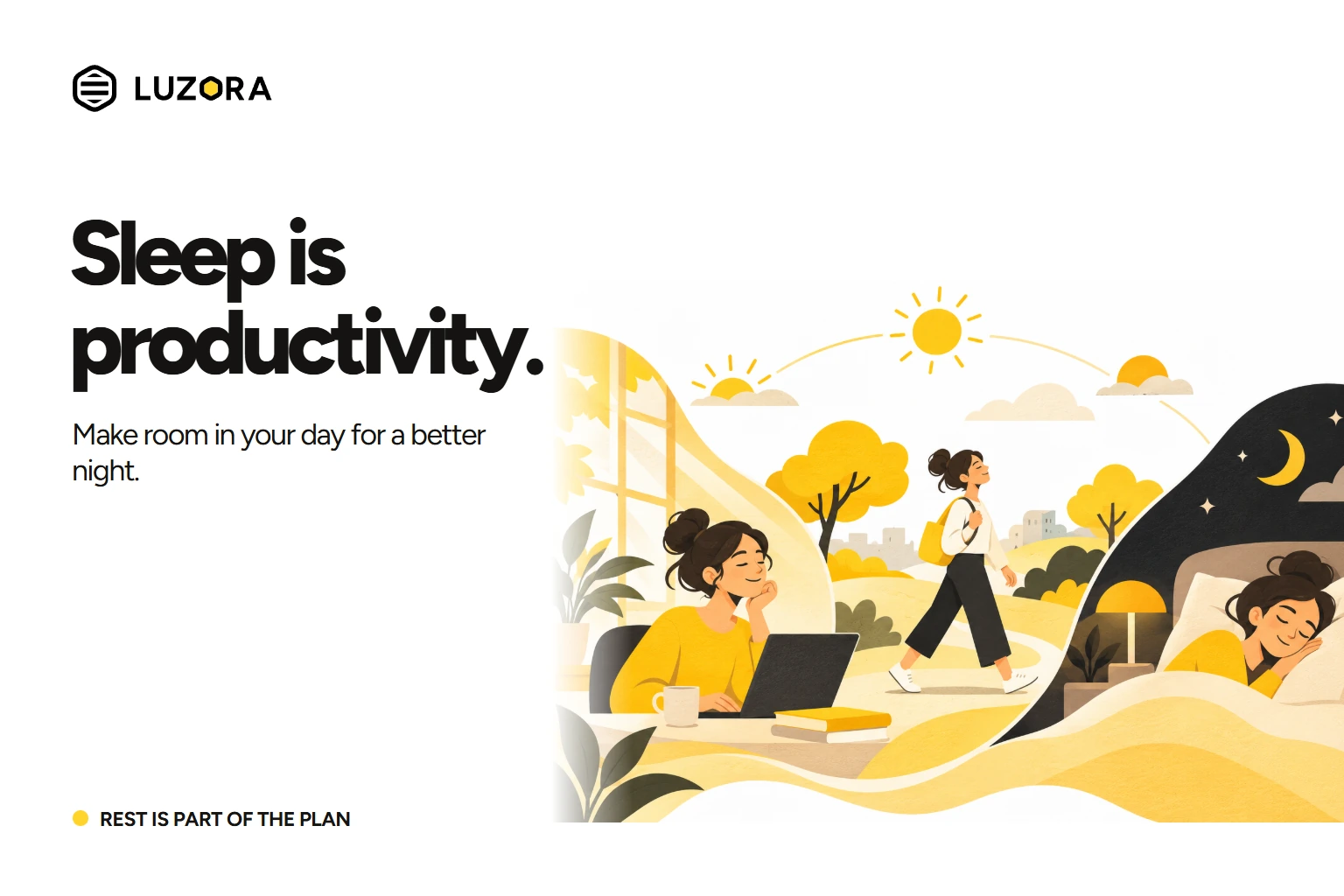
Sleep is part of the work, even if no task list gives you credit for it. When your day has no clear beginning, no room to move, and no point where unfinished work is handed to tomorrow, bedtime can become another shift.
To sleep better at night, start during the day: protect enough time for sleep, keep a reasonably steady wake time, get daylight and movement, time caffeine with bedtime in mind, and decide when work ends. You cannot schedule yourself into perfect sleep. You can make the next night easier to enter.
The CDC recommends at least seven hours of sleep for adults aged 18–60, and the National Heart, Lung, and Blood Institute (NHLBI) notes that giving yourself enough time to sleep can help you feel more productive during the day. Sleep loss can affect attention and performance. Treating rest as expendable may leave tomorrow's work harder than it needed to be.
1. Give tomorrow a realistic wake time
Start with the time you need to wake up. Then count backward to leave enough room for sleep and a little time to wind down. If you must be up at 7 a.m., a plan that assumes you can work until midnight, scroll for an hour, and feel rested is already overbooked.
Try to keep your sleep and wake times reasonably consistent, including days off. NHLBI advises limiting the difference between weeknights and weekends to about an hour where possible. That is a guide, not a reason to punish yourself after one late night.
The productivity move is to treat your intended bedtime as a boundary when you plan the day. Put the deadline for work before your wind-down, not at the moment you hope to fall asleep. If your schedule changes because of shift work or caregiving, protect a regular sleep opportunity as best you can rather than forcing a conventional 9-to-5 routine onto your life.
Try today: Write down tomorrow's wake time. Ask whether tonight's plan actually leaves enough hours for sleep.
2. Get outside, and move before the day disappears
Daylight and physical activity are not rewards you earn after finishing every task. They belong in the plan. NHLBI recommends spending time outside when possible and being physically active; CDC guidance also points to bright daytime light and exercise as helpful sleep habits.
You do not need an elaborate morning routine. Open the curtains, step outside after breakfast, or walk for part of a break. If you spend most of the day at a screen, a short walk can also mark a real pause between work blocks. Put it where it will happen, not in the imaginary spare time after everything else is done.
Choose movement that fits your body and schedule. Vigorous exercise close to bedtime may be too stimulating for some people; if you notice that pattern, move it earlier. A gentle evening walk may feel different. Pay attention to your own nights.
Try today: Put one outdoor break or walk on your calendar before the afternoon fills up.
3. Do the important work while the day still has room
An overloaded task list makes it easy to spend the morning reacting and the evening trying to rescue what mattered. Pick one meaningful result for the day and define the next action clearly enough to begin it.
“Make progress on the course” can hang over you for hours. “Watch lesson four and write three notes before lunch” has an end. When that block finishes, you can decide what comes next without carrying an undefined obligation into the evening.
Protect a realistic block for that action. Then leave space for messages, admin, meals, and the interruptions that tend to happen anyway. If browser distractions keep swallowing the block, our guide to curbing distractions today offers five small changes you can try. A focused day does not require every minute to be booked. It requires knowing which work matters before you run out of time to do it.
Try today: Choose one result that would make the workday feel complete. Schedule its first action early enough that you will not need a late-night catch-up session.
4. Set a caffeine cutoff that matches your bedtime
Coffee can help you feel alert, but the timing matters. NHLBI says caffeine's effects can last up to eight hours. An afternoon coffee may still be with you when you want to sleep. Caffeine also appears in tea, cola, energy drinks, and chocolate.
You do not have to use one universal cutoff. Work backward from your target bedtime and notice how you respond. If sleep has been difficult, try moving your last caffeinated drink earlier for a week and see whether evenings change. That is a more useful experiment than adding another coffee every time a poorly rested afternoon arrives.
If you nap, keep it brief and early enough that it does not compete with nighttime sleep. NHLBI suggests adults limit naps to about 20 minutes, particularly when falling asleep at night is already hard.
Try today: Decide when your last caffeinated drink will be, before you reach for it out of habit.
5. Give unfinished work a place to return
At the end of the workday, write down what is still open. For each important item, name the next action and when you will return to it. “Finish proposal” is a worry. “Tomorrow at 10, open the proposal and revise the pricing page” is a plan.
A small sleep-lab study comparing bedtime writing tasks found that people assigned to write a specific to-do list fell asleep faster than those who wrote about completed activities. It is one study in a controlled setting, not a promise that a list will cure sleeplessness. Still, a short handoff can spare you from repeatedly trying to remember tomorrow's work after the lights are out.
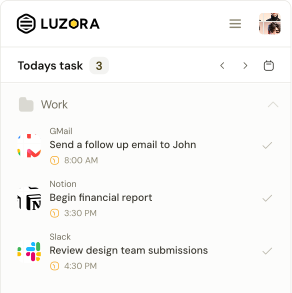
Do this before your wind-down if screens keep you awake. Paper works. If the task lives on a website, Luzora can keep the page attached to a scheduled action, so you know where to resume. Save the action, choose a return time, and close the work tab. Luzora holds the reminder; you still decide when to stop working.
Try today: Spend five minutes making tomorrow's first step clear. Leave the rest for tomorrow.
6. Make the last part of the day quieter
Your workday may be done while your mind is still responding to it. Give yourself a transition: finish the last message, put tomorrow's task where you will find it, lower the lights, and choose something quieter than another work session.
NHLBI recommends using the hour before bed for quiet time and avoiding bright artificial light and intense exercise then. It also advises avoiding heavy meals and alcohol close to bedtime and keeping the bedroom cool, dark, and quiet. You do not need to turn these into a complicated checklist. Choose the change that addresses what actually keeps you awake.
If you regularly have trouble sleeping despite giving yourself enough opportunity, or you feel exhausted even after a full night in bed, talk with a healthcare professional. For long-term insomnia, NHLBI describes cognitive behavioral therapy for insomnia (CBT-I) as a usual first treatment option. A productivity system cannot diagnose or treat a sleep disorder.
A day that leaves room for sleep
Tomorrow, try a modest sequence: wake at a workable time, find daylight, choose one important action, move during the day, stop caffeine early enough for your bedtime, and write down where unfinished work resumes. Then let the evening be an evening.
Some days will break the plan. You can begin again the next morning. The goal is to get useful work done and protect the sleep that lets you do it again.